

Fall is the most commercially intense quarter of the business year. Conferences resume. Board meetings lock in. End-of-year deals accelerate. And commercial airlines, operating on fixed schedules built for leisure peaks, are not designed around any of that.
Corporate requests for private charters tripled in 2025 compared to 2024. That is not a coincidence. Business leaders are recognizing that private aviation is not a luxury decision. It is a productivity decision. And in the fall, when the margin between closing a deal and missing one can come down to a single delayed flight, that distinction carries real commercial weight.
Inside this article:
- Why fall business travel creates specific flexibility demands commercial airlines cannot meet
- How private jet charter compares to commercial flights on time, access, and control
- Which aircraft types suit which fall business travel profiles
- How on-demand charter works and when it outperforms jet cards and fractional ownership
- NEW: How to evaluate the true cost of flying commercial against the strategic value of flying private
At ACC Aviation, we provide private jet charter solutions for business travelers who cannot afford the unpredictability of commercial air travel during the quarter that matters most. Our team is ready to structure a charter arrangement around your fall calendar, not the airline’s.
Why Fall Travel Demands More Flexibility
The fall quarter compresses an extraordinary volume of high-stakes business activity into a narrow window. September through November brings conference season, fiscal year-end planning cycles, client review meetings, and board-level events, often simultaneously, often in different cities.
Commercial airlines simply are not built for this. Where traditional ownership once defined private aviation, today’s customers prefer more flexible, asset-light models that provide financial agility while still guaranteeing access to a global fleet. That shift reflects a broader recognition among business executives: schedule control is a competitive asset.
The specific fall travel pressures that commercial air travel cannot accommodate:
- Multi-city itineraries requiring same-day travel between cities with no direct scheduled service between them
- Last-minute bookings triggered by client requests, deal developments, or board-level schedule changes
- Major events and conference peaks that fill commercial capacity weeks in advance, leaving business travelers competing for seats
- Weather disruptions that hit commercial hubs hardest in October and November, creating cascading delays across connected routes
- Early morning departures for high-stakes business meetings that require arrival before commercial first flights land
Private jet travel removes each of these variables. The aircraft departs when your schedule requires, from an airport that is convenient for you, direct to your destination, without the structural inefficiencies that define commercial air travel at peak periods.
Pro tip: Fall conference season in cities like San Francisco, Chicago, and New York creates predictable commercial capacity crunches. Booking private jet charter 2 to 3 weeks ahead of major industry events in these cities secures aircraft availability before the market tightens.
Private Jet vs. Commercial Flights: The Real Comparison

The case for private aviation in fall business travel is not built on comfort alone. It is built on time, access, and control — three things commercial airlines structurally cannot offer at the level serious business travel demands.
Head-to-Head Comparison
| Factor | Private Jet Charter | Commercial Flights |
|---|---|---|
| Airport access | 7,000+ airports globally | ~500 major commercial airports |
| Check-in to wheels-up | 15–20 minutes | 90–180 minutes minimum |
| Time saved per trip | 2–4 hours | Baseline |
| Schedule control | Full, depart on your timeline | Fixed airline schedules |
| Last-minute changes | Immediate, no penalties | Rebooking fees, availability risk |
| Direct routing | Point-to-point available | Hub-and-spoke with connections |
| Privacy | Dedicated cabin | Shared commercial environment |
| Productivity in flight | Full working environment | Limited, public setting |
| Access to smaller airports | Yes, including regional airports | No |
Private jet travel can save 3 or more hours per trip, and that time compounds across a fall quarter with 8 to 12 trips. For a senior executive billing at $500 or more per hour, the arithmetic favors private aviation before the comfort argument is even introduced.
Unlike commercial flights, private jet travelers avoid long security lines, shared terminals, and the unpredictability of major commercial hubs during peak periods. Private terminals offer a completely different experience: direct boarding, no queues, and immediate departure when the aircraft is ready.
The access advantage is equally significant. Private jets provide access to over 7,000 airports worldwide, including smaller airports and regional airports that commercial airlines do not serve. For business travelers whose clients, facilities, or meetings are located away from major commercial hubs, that access translates directly into reduced ground transportation time at both ends of every trip.
Choosing the Right Aircraft for Fall Business Travel
Not every fall business trip has the same profile. A day trip from New York to Boston requires a fundamentally different aircraft than a multi-stop transcontinental itinerary. Matching the right aircraft to the specific mission is how private aviation delivers maximum value per flight hour.
Aircraft Selector by Fall Travel Profile
| Travel Profile | Recommended Aircraft | Passenger Count | Range |
|---|---|---|---|
| Short regional hops (under 500 nm) | Very light jets / Light jet | 4–6 | Up to 1,500 nm |
| Mid-range domestic (500–1,500 nm) | Midsize jets / Super midsize jets | 7–9 | Up to 3,500 nm |
| Cross-country (1,500–3,000 nm) | Large cabin jets | 8–12 | Up to 4,000 nm |
| Transcontinental / International | Ultra long range jets | 10–19 | 7,000+ nm |
| Small team, flexible routing | Light jet | 4–6 | Up to 2,000 nm |
| Full leadership team movement | Large cabin or group charter | 12–30+ | Route-dependent |
Key aircraft worth knowing for fall business travel:
- Embraer Phenom 300E: Seats 6 to 8 passengers, ideal for efficient short to mid-range domestic routes. One of the most popular light jets in the charter market for a reason.
- Bombardier Challenger 350: A super midsize benchmark. Seats approximately 9 passengers with a cabin designed for productive work in flight.
- Bombardier Challenger 650: Large cabin, genuine transatlantic capability, and the kind of cabin space that turns a long haul flight into an extension of the boardroom.
- Bombardier Global 6000: Ultra long range performance with a multi-zone cabin suited to international travel where jet lag management and in-flight rest matter.
- Gulfstream G650: Approximately 7,500 nm range, low cabin altitude for reduced jet lag, and one of the most sought-after aircraft for senior executive international travel.
For fall business travelers running multi-city itineraries, the ultimate guide to choosing the right aircraft provides a detailed framework for matching aircraft type to mission requirements across every leg.
On-Demand Charter vs. Jet Cards and Fractional Ownership
Fall business travel is the season where the differences between access models become most apparent. Understanding which model fits your actual travel volume is the most important financial decision in private aviation.
Access Model Comparison
| Model | Best For | Commitment | Flexibility |
|---|---|---|---|
| On-demand charter | Under 50 hours annually | None | Maximum |
| Jet cards | 25–100 hours annually | Minimum hour purchase | High |
| Fractional ownership | 100–300 hours annually | Multi-year share purchase | Moderate |
| Full ownership | 300+ hours annually | Full capital commitment | Full |
On-demand trips generated 51.62% of private jet charter services market revenue in 2025, reflecting reliance on flexible arrangements for last-minute executive travel and special events.
- On-demand charter is the right model for most fall business travelers who fly privately fewer than 50 hours per year. It requires no long-term contract, no minimum commitment, and no membership fee. You pay only for the flights you book. Charter services can be arranged within 24 to 48 hours, and in many cases same-day, making it the most responsive option when a client meeting appears on short notice.
- Jet cards require a minimum purchase of 25 flight hours and offer fixed hourly rates within a defined aircraft category. They suit travelers who fly regularly enough to benefit from rate certainty but do not want the asset and operational complexity of fractional ownership. Jet card pricing climbed 28% between 2020 and 2025, yet adoption continued to rise as flight activity among members gained year-on-year.
- Fractional ownership involves purchasing a share of a specific aircraft, typically ranging from 1/16 to 1/4 of the asset. It suits organizations flying 100 to 300 hours annually who value guaranteed availability and consistent aircraft type. The purchase price and operating costs are shared proportionally among co-owners.
For business leaders whose fall travel needs are variable, on-demand charter through a specialist broker delivers the broadest flexibility without the financial commitment that fractional ownership or jet card programs require. Empty leg flights are also worth monitoring for fall travel with flexible dates, offering savings of 20% to 75% on repositioning flights.
The Productivity Case for Flying Private
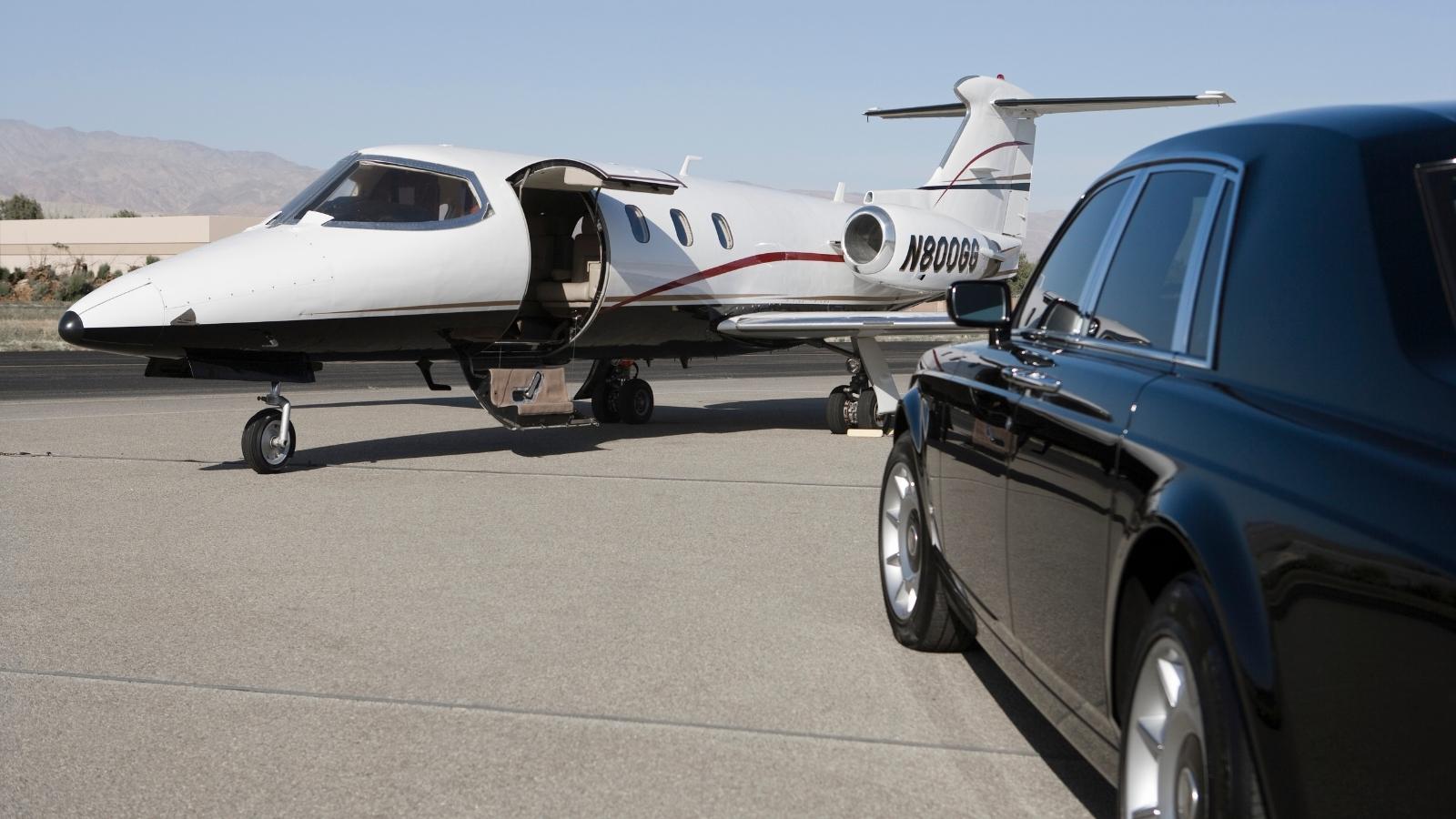
The private cabin is not just a more comfortable place to sit. For business executives, it is a functional workspace that commercial airlines cannot replicate.
A private jet cabin provides a quiet, confidential environment where sensitive business discussions, contract reviews, and strategic planning can happen in flight without the exposure of a shared commercial environment. The aircraft becomes an extension of the office, not a pause in the working day.
What the private cabin delivers that commercial air travel cannot:
- Confidential discussions without concern for adjacent passengers
- Onboard workspace configured for working in flight, with power, Wi-Fi, and table space designed for productivity rather than passenger density
- In-flight amenities tailored to the specific needs of the group, including catering preferences, connectivity requirements, and cabin configuration
- Arrival at destination airports closer to the actual meeting location, reducing ground transportation time materially
- Nonstop flights on routes where commercial options require a connection through a major hub
Business aviation enhances productivity during travel with onboard workspace capabilities, with 81% of affluent professionals now citing flexible air travel as a must for their work style.
For a high-stakes business meeting where preparation in transit is as valuable as the meeting itself, the private cabin removes every obstacle that commercial air travel places between the executive and their best work. That is not a lifestyle argument. It is a performance one.
Our business jet charter service is structured around exactly this. Every detail, from cabin configuration to catering to connectivity, is coordinated in advance so that the aircraft is ready to function as a mobile office from the moment the door closes.
Safety, Sustainability, and Choosing a Broker
Two areas that sophisticated business travelers increasingly evaluate when selecting a private aviation partner are safety credentials and environmental responsibility.
Safety Standards to Look For
The private aviation market operates across a wide range of operators, and safety standards vary meaningfully between them. When evaluating a charter provider, the following certifications indicate genuine operational rigor:
- ARGUS Platinum: The highest safety rating for operators in the US market, requiring comprehensive audits of crew training, maintenance programs, and operational procedures
- Wyvern Wingman: Requires annual recertification through independent safety audits covering crew qualifications and aircraft airworthiness
- IS-BAO: A global standard for business aircraft operations, covering safety management systems and operational best practices
- FAA Part 135: The regulatory baseline for on-demand charter operations in the United States
At ACC Aviation, we access the Wyvern database as part of our operator vetting process, ensuring every aircraft we source meets rigorous safety standards before a client boards.
Sustainability in Private Aviation
Sustainable aviation fuel availability is expanding at major airports, and some corporate clients now include SAF contributions as a standard part of their charter requirements.
Sustainable aviation fuel can reduce lifecycle emissions by up to 80% compared to conventional jet fuel, and newer aircraft burn 15 to 25% less fuel than older models. For organizations with ESG commitments, requesting SAF-capable operators and carbon offset programs is increasingly standard practice in charter selection.
We are committed to responsible aviation practices and can advise on sustainable aviation fuel options and carbon offset programs as part of any charter arrangement.
Fly Smarter This Fall with ACC Aviation
Fall business travel rewards preparation and punishes inflexibility. Commercial airlines are built for neither. Private jet charter exists precisely for the quarter when schedule control, destination access, and productive travel time determine whether the business outcomes you are working toward actually get delivered.
Here is what to carry forward:
- Private jets access 7,000+ airports, including smaller airports commercial airlines do not serve
- On-demand charter requires no long-term contract and can be arranged within 24 to 48 hours
- The right aircraft depends on passenger count, range, and mission profile, not preference alone
- Empty leg flights offer 20 to 75% savings for fall travelers with date flexibility
- Safety credentials including ARGUS Platinum and Wyvern Wingman are non-negotiable selection criteria
- Sustainable aviation fuel options are now available and increasingly standard for corporate charters
Fall is the quarter where business momentum either compounds or stalls. Private jet charter gives you the schedule control, airport access, and productivity environment to make sure it compounds.
At ACC Aviation, we provide personalized service from aircraft selection through to landing, with a modern fleet covering every fall travel mission from short regional hops to international itineraries. Contact our team to build your fall travel plan.
Frequently Asked Questions
Which private jet is the most comfortable?
Ultra long range jets like the Bombardier Global 7500 and Gulfstream G700 offer the most comfort, with multi-zone cabins, flat beds, and low cabin altitude that reduces jet lag on long haul flights.
What is the average cost to charter a private jet?
Charter costs vary by aircraft type. Light jets start in the low five figures per flight. Ultra long range jets can exceed $25,000 per hour depending on route and aircraft availability.
How much does a 25-hour NetJets private jet lease cost?
NetJets jet card pricing varies by aircraft category and market conditions. Jet card pricing rose 28% between 2020 and 2025. Contact providers directly for current 25-hour program rates.
Can I book a private jet charter last minute?
Yes. On-demand charter flights can typically be arranged within 24 to 48 hours. Same-day bookings are possible depending on aircraft availability and destination airports.
Are private jets safer than commercial flights?
Reputable private jet operators hold certifications including ARGUS Platinum, Wyvern Wingman, and IS-BAO, and must meet FAA Part 135 regulations. Vetting your charter provider’s safety credentials is essential.
